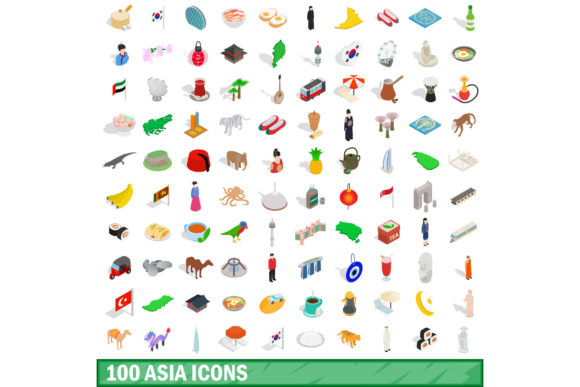
100 Asia Icons Set, Isometric 3d Style
When you are designing a project that needs to tell a story about Asian culture, travel, or business, finding the right visual elements can be a challenge. This is where the 100 Asia Icons Set, Isometric 3D Style becomes an essential tool for creators. Imagine looking at a bustling city street in Tokyo, a serene temple in Kyoto, or a vibrant market in Bangkok from a slightly elevated angle. That specific perspective creates depth and makes flat images feel like miniature worlds. This collection captures that exact feeling, offering a modern twist on traditional symbols.
These icons are not just simple drawings; they are carefully crafted vector illustrations designed to add dimension and professionalism to your work. Whether you are a seasoned graphic designer, a small business owner launching a new website, or a blogger trying to make your posts stand out, having access to high-quality, consistent imagery is crucial. The set provides a cohesive visual language that helps communicate complex ideas quickly and effectively without overwhelming your audience with text.
Why Choose Isometric Design for Your Projects?
You might wonder why so many professionals are switching to isometric styles over standard flat icons. The answer lies in how our brains process information. Isometric design uses a specific type of projection where all three dimensions are visible, but there is no vanishing point. This creates a sense of scale and structure that feels both organized and dynamic. It allows users to visualize relationships between objects more easily than a flat image ever could.
In the context of the 100 Asia Icons Set, Isometric 3D Style, this approach brings cultural landmarks, food items, and daily life activities to life. A simple icon of a noodle bowl or a pagoda gains character when it has shadows, layers, and volume. This style is particularly popular because it works well across different mediums. It looks great on mobile screens where space is limited, yet it holds up beautifully on large print banners or presentation slides. The 3D effect adds a layer of sophistication that signals quality to your viewers immediately.
For beginners, this style can sometimes seem intimidating, but these icons remove the guesswork. Instead of spending hours trying to draw a building with correct perspective lines, you simply drag and drop a pre-made asset. This efficiency allows you to focus on the bigger picture of your design strategy rather than getting stuck on technical drawing details.
What Makes This Collection Unique?
The value of this set goes beyond just having one hundred images. It is about consistency and versatility. Each icon follows the same rules regarding lighting, shadow, and color palette, ensuring that your final design looks polished and unified. You won't end up with a mix of cartoonish doodles and hyper-realistic photos that clash visually. Instead, you get a harmonious suite of graphics that speak the same visual language.
The collection covers a wide spectrum of themes relevant to Asia. You will find representations of:
- Cultural Landmarks: From the Great Wall to the Taj Mahal, capturing iconic structures.
- Festivals and Traditions: Lanterns, dragons, and traditional attire that celebrate heritage.
- Gastronomy: Sushi, dumplings, tea ceremonies, and street food staples.
- Nature and Geography: Cherry blossoms, bamboo forests, mountains, and rivers.
- Modern Life: Technology hubs, transportation systems, and urban architecture.
This variety ensures that whether you are creating content for a travel blog, a restaurant menu, or an educational presentation, you have the perfect visual to support your message. The isometric style makes these subjects feel accessible and engaging, inviting the viewer to explore the details.
Practical Applications for Creators and Businesses
So, where exactly can you use the 100 Asia Icons Set, Isometric 3D Style? The possibilities are nearly endless, spanning personal projects to commercial ventures. Let's look at some realistic scenarios where these assets shine.
If you are a web developer or UI/UX designer, these icons are perfect for navigation menus, feature sections, or loading pages. An e-commerce site selling Asian products could use icons to categorize items by region or type, making the shopping experience more intuitive. For educators, creating lesson plans about geography or history becomes much more exciting when students can interact with 3D models of historical sites instead of staring at static textbook photos.
Marketers and social media managers often struggle to create eye-catching infographics. Using this set, you can build stunning charts that show tourism statistics or economic growth in Asian markets. The 3D aspect draws the eye, increasing the likelihood that people will stop scrolling and engage with your content. Similarly, freelancers pitching ideas to clients can include mockups featuring these icons to demonstrate a clear vision for a brand identity.
Even small business owners can benefit greatly. Imagine opening a new sushi bar or a travel agency focused on Southeast Asia. You need logos, signage, and promotional materials that reflect your niche. These icons provide a ready-made library of professional-grade graphics that save you money on custom illustration services while maintaining a high standard of quality.
File Formats and Flexibility
One of the strongest advantages of this set is the range of file formats provided: JPG, EPS, AI, PSD, and PNG. This flexibility is critical for adapting to different workflows. If you are working in Adobe Illustrator, the AI and EPS files allow you to edit paths, change colors, and resize elements without losing quality. This is essential for printing large banners or merchandise where crisp edges are non-negotiable.
For web designers, the PNG files with transparent backgrounds are invaluable. They let you place the icons directly onto any background color or image without worrying about white boxes around them. The PSD files are perfect for those who prefer Photoshop, offering layered compositions that you can tweak to fit specific lighting or texture requirements. Finally, JPG files ensure compatibility with platforms that do not support transparency, giving you a backup option for quick uploads.
Important Considerations Before You Start
While this tool is incredibly powerful, there are a few things to keep in mind to get the best results. First, always respect the licensing terms associated with the icons. Even if you purchase a set, check if you are allowed to use the icons for commercial purposes, such as selling products or using them in client work. Most sets offer broad licenses, but understanding the rules protects you legally.
Secondly, consider your color palette. While the icons come in their default colors, part of the magic of vector graphics is customization. Try to adjust the colors to match your brand guidelines. However, be careful not to alter the shading too drastically, as this can ruin the 3D illusion and make the icons look flat or broken. Subtle adjustments usually yield the best balance between branding and style integrity.
Finally, think about the context. Isometric icons are detailed and visually rich. If your design already has a lot of text or other busy elements, adding too many 3D icons might clutter the layout. Use them strategically to highlight key points or break up long blocks of text. Less is often more, even with such a comprehensive set.
In summary, the 100 Asia Icons Set, Isometric 3D Style offers a bridge between traditional cultural representation and modern digital design. It empowers creators to tell stories with depth and clarity, regardless of their technical skill level. By providing versatile file formats and a diverse range of subjects, it supports everything from casual hobby projects to serious commercial campaigns. Whether you are mapping out a travel itinerary, designing a corporate brochure, or teaching a class, these icons provide the visual polish needed to make your work memorable and effective.