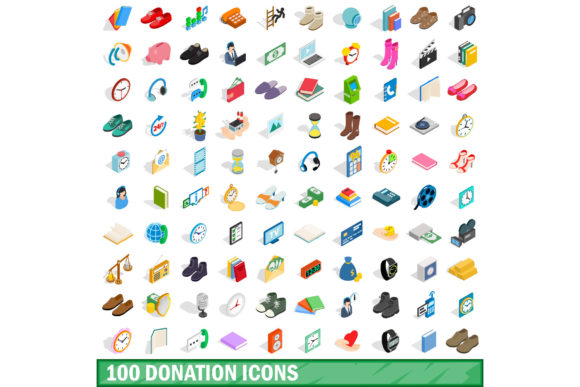
Transforming Digital Campaigns with a Comprehensive 100 Donation Icons Set in Isometric 3D Style
In the rapidly evolving landscape of digital communication, visual storytelling has become the cornerstone of effective engagement. Whether you are launching a non-profit organization, organizing a community fundraiser, or creating an educational platform about social responsibility, the way you present your message matters immensely. This is where high-quality vector illustrations play a pivotal role. Specifically, a curated collection of a 100 donation icons set and a specialized 100 donation icons set in isometric 3D style offers designers and content creators a versatile toolkit to elevate their projects from simple text to compelling visual narratives.
This article explores the significance of these icon sets, their practical applications across various sectors, and why choosing the right format—such as JPG, EPS, AI, PSD, and PNG—is crucial for professional design work. By understanding the depth and utility of these assets, readers can make informed decisions that enhance their creative output and communication strategies.
The Power of Visual Language in Charitable Initiatives
When people encounter a request for help or a call to donate, they often process information visually before reading a single word. The human brain processes images 60,000 times faster than text. Therefore, using a cohesive set of icons can instantly convey complex ideas about charity, giving, and community support. A standard donation icons set typically includes flat, minimalist representations of hands holding hearts, piggy banks, coins, envelopes, and handshake gestures. These symbols serve as universal shorthand for generosity.
However, modern design trends have shifted towards more dynamic and engaging visuals. This is where the isometric 3D style comes into play. Isometric design creates a three-dimensional appearance on a two-dimensional plane, offering depth, perspective, and a sense of realism without the complexity of full 3D rendering. When applied to donation themes, these icons can look like miniature scenes: a glowing wallet opening up, a hand placing a coin into a transparent jar, or a heart-shaped building being constructed brick by brick. This style not only captures attention but also adds a layer of sophistication and modernity to any interface or print material.
Bridging the Gap Between Creativity and Functionality
One of the primary misconceptions about vector graphics is that they are only suitable for logos. In reality, a comprehensive 100 donation icons set is designed to be functional across a wide array of mediums. For instance, in web development, these icons can serve as interactive buttons that change state when hovered over, guiding users toward a donation page. In mobile applications, they can act as status indicators for completed transactions or milestones reached in a fundraising campaign.
The versatility of these assets extends to educational materials as well. Teachers and curriculum developers can use these icons to create engaging worksheets about financial literacy or civic duty. Instead of dry charts, students can interact with colorful, 3D-rendered icons that explain concepts like "budgeting," "saving," and "giving back." This approach makes learning more intuitive and memorable, proving that good design is not just about aesthetics but about enhancing comprehension.
Why Isometric 3D Design is Revolutionizing User Experience
To understand the value of the 100 donation icons set in isometric 3D style, one must appreciate the psychology behind 3D design. Three-dimensional elements draw the eye and create a sense of immersion. In the context of charitable giving, this immersion can translate to trust. A flat, generic icon might feel impersonal, but a detailed, isometric illustration of a community center being built or a family receiving aid can evoke empathy and connection.
Consider the scenario of a crowdfunding website. A user scrolling through a list of campaigns needs to quickly identify which causes are active, funded, or seeking help. An isometric icon set allows designers to create distinct visual cues for each status. A 3D icon showing a cracked piggy bank could represent a project needing urgent funding, while a fully filled, shining 3D vault could indicate a successfully completed goal. This visual hierarchy reduces cognitive load, allowing users to navigate the site with ease and confidence.
Furthermore, isometric design is highly scalable. Because these are vector-based illustrations, they maintain their crispness regardless of size. You can shrink them down to fit a favicon or enlarge them to cover a billboard without losing quality. This scalability is essential for brands that need to maintain consistency across different platforms, from social media avatars to large-scale event banners.
Navigating File Formats: Choosing the Right Tool for the Job
When acquiring a 100 donation icons set, the file formats available are just as important as the designs themselves. Understanding the differences between JPG, EPS, AI, PSD, and PNG ensures that you can utilize the assets effectively in your specific workflow.
- EPS (Encapsulated PostScript) and AI (Adobe Illustrator): These are the gold standards for vector graphics. If you plan to resize your icons frequently or integrate them into a larger logo design, these formats are indispensable. They allow you to edit individual paths, change colors, and adjust shapes without pixelation. For professional graphic designers working on branding guidelines, having the source files in AI or EPS is critical.
- PSD (Photoshop Document): For designers who prefer raster-based editing or need to apply complex textures, shadows, and lighting effects to their isometric icons, PSD files offer layers that can be manipulated individually. This format is perfect for creating composite images where the donation icons need to blend seamlessly with photography or other background elements.
- PNG (Portable Network Graphics): Known for supporting transparency, PNG is the go-to format for web and app development. It allows the icons to float above any background color without unsightly white boxes. High-resolution PNGs are ideal for websites where performance and visual clarity are paramount.
- JPG (Joint Photographic Experts Group): While less flexible for editing due to compression artifacts, JPGs are universally compatible and lightweight. They are useful for quick previews, email newsletters, or situations where file size is a major constraint, though they should be used with caution if transparency is required.
Having access to all these formats within a single download means that whether you are a freelance illustrator, a corporate marketing manager, or a student, you have the flexibility to adapt the 100 donation icons set to your exact needs.
Practical Applications Across Industries
The utility of these icon sets transcends the boundaries of the non-profit sector. Let's explore how different industries can leverage these resources:
Business and Corporate Social Responsibility (CSR)
Modern businesses are increasingly expected to demonstrate social responsibility. Companies can use a 100 donation icons set to highlight their CSR initiatives on annual reports, internal newsletters, and marketing collateral. Isometric 3D icons can visualize the impact of corporate donations, such as showing a factory donating equipment to a school or employees volunteering time. This visual proof helps build brand loyalty and trust among consumers who prioritize ethical business practices.
Education and E-Learning
In the realm of education, visual aids are essential for explaining abstract concepts. A teacher creating a lesson on economics can use 3D icons to illustrate supply and demand, savings accounts, and charitable contributions. Interactive e-learning modules can use these icons as clickable elements that trigger animations or sound effects, making the learning experience more engaging for younger audiences.
Tech Startups and Apps
Fintech startups focused on micro-donations or peer-to-peer lending rely heavily on user-friendly interfaces. A clean set of isometric icons can guide users through the donation process, reducing friction and increasing conversion rates. For example, an animation of a coin moving from a phone screen to a global map can visually represent the speed and reach of a digital donation.
Clarifying Common Misunderstandings
There is a common assumption that using pre-made icon sets results in generic or unoriginal designs. However, this is a misunderstanding of how professional designers work. A 100 donation icons set is not a final product; it is a raw material. Skilled designers take these base assets and customize them to fit their unique brand identity. They might alter the color palette to match company branding, combine multiple icons to create custom infographics, or animate them for video content.
Another misconception is that 3D icons are too heavy for web use. With modern optimization techniques and the availability of high-quality PNGs or SVG conversions, isometric 3D icons can be incredibly lightweight and fast-loading. The key lies in selecting the right resolution and compressing the files appropriately without sacrificing visual integrity.
Conclusion: Elevating Your Design with Intention
In conclusion, the integration of a 100 donation icons set and its isometric 3D counterpart represents more than just an aesthetic upgrade; it is a strategic investment in communication. By providing a rich library of visual tools, these sets empower creators to tell stories that resonate, inspire action, and foster a sense of community. Whether you are designing a website, a presentation, or a marketing campaign, the ability to choose from multiple formats like JPG, EPS, AI, PSD, and PNG ensures that your vision can be realized with precision and professionalism.
As we move further into a digital-first world, the demand for clear, engaging, and meaningful visual content will only grow. Embracing these resources allows us to bridge the gap between intention and impact, turning simple requests for help into powerful movements for change. By understanding the nuances of these icon sets and applying them thoughtfully, anyone can contribute to a more visually rich and socially conscious digital landscape.