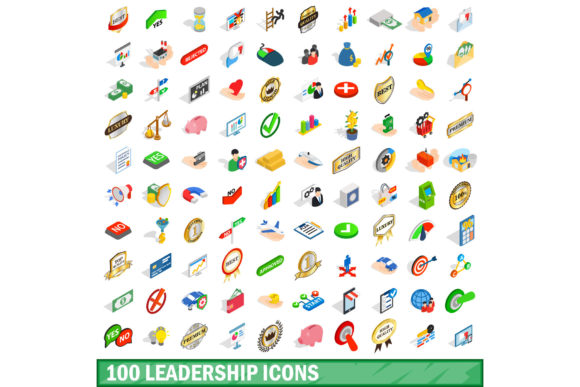
100 Leadership Icons Set for Modern Design
Effective communication in the digital age relies heavily on visual shorthand. We live in a world where users scan content before they read it, and complex concepts like management, strategy, and team dynamics need to be conveyed instantly. This is where the 100 Leadership Icons Set becomes an indispensable asset for professionals across the spectrum. Whether you are building a corporate dashboard, designing a mobile app for entrepreneurs, or creating educational materials for business students, having a cohesive library of symbols can transform a cluttered interface into a clear, engaging experience.
This collection goes beyond simple graphics; it offers a structured way to visualize abstract leadership qualities. From strategic planning and ethical decision-making to team collaboration and innovation, each icon serves as a visual anchor. The set includes variations in isometric 3D style, adding depth and modernity that flat designs sometimes lack. These dimensions allow designers to create interfaces that feel tactile and immersive, guiding the user's eye through the hierarchy of information with natural ease.
Why Visual Consistency Matters in Leadership Themes
When discussing leadership, the tone of your design is just as important as the text accompanying it. Inconsistent imagery can confuse the audience, making a brand look amateurish or untrustworthy. A unified set ensures that every symbol shares the same line weight, color palette, and perspective. The 100 Leadership Icons Set provides this cohesion, allowing creators to mix and match elements without breaking the visual narrative.
The inclusion of both standard vector formats and 3D styles gives you flexibility. You might use the flat versions for minimalist web headers where speed and clarity are paramount. Conversely, the isometric 3D illustrations are perfect for landing pages, presentation slides, or infographics where you want to draw attention to specific features like "Team Building" or "Strategic Vision." By maintaining consistency within these categories, you ensure that your message remains professional and polished.
Creative Applications Across Industries
The versatility of this icon library extends far beyond traditional corporate websites. Here is how different creative professionals can adapt these assets for unique goals:
- Digital Product Designers: Use the icons to create intuitive navigation menus for SaaS platforms. For instance, a dashboard for project management software can utilize the "Planning" and "Execution" icons to help users quickly locate tools for workflow optimization. The 3D style adds a premium feel that justifies subscription tiers.
- Content Creators and Bloggers: If you run a blog about entrepreneurship, static images can sometimes feel dull. Embedding these icons next to key takeaways breaks up long blocks of text. They act as visual bullet points that keep readers engaged and encourage them to scroll further down the page.
- Educators and Trainers: For workshops or online courses, these visuals are invaluable. Instead of listing leadership traits in a paragraph, display them as a grid of icons. This helps learners retain information better by associating a concept with a distinct visual shape.
- Small Business Owners: Marketing materials often suffer from generic stock photography. Using custom icons allows a small business to project a larger, more established image. Think of using the "Innovation" icon on a brochure or the "Customer Service" icon on a support page to reinforce company values.
Exploring the Isometric 3D Style
The isometric 3D style found in this set represents a significant shift in design trends. Unlike perspective drawings that vanish at a horizon line, isometric projections maintain parallel lines, creating a sense of order and structure. This makes them particularly effective for illustrating systems, processes, and organizational hierarchies.
Imagine a diagram showing the lifecycle of a project. With the 3D icons, you can stack layers visually: one layer for research, another for development, and a third for launch. This spatial arrangement helps the viewer understand the relationship between different stages of leadership tasks. It turns a linear process into a tangible journey.
For designers working on pitch decks, these 3D elements add a dynamic quality that static vectors cannot achieve. When projected on a large screen during a meeting, the subtle shadows and angles catch the light, drawing the audience's focus to critical data points. It signals that the presenter has paid attention to detail and cares about the user experience.
Technical Flexibility and Workflow Integration
One of the strongest advantages of this collection is its comprehensive file format support. The availability of JPG, EPS, AI, PSD, and PNG files means you can integrate these assets into virtually any workflow, regardless of your preferred software suite.
If you are a graphic designer working in Adobe Illustrator, the native .AI and .EPS files allow for infinite scalability. You can resize a single icon from a tiny favicon to a massive billboard without losing resolution. The editable paths let you tweak colors to match your exact brand guidelines or modify shapes to fit a specific layout constraint.
For those who prefer raster-based editing, the .PSD and .PNG options provide high-resolution layers. This is essential for photo manipulation projects where you might want to composite the icons into a realistic scene or apply complex textures. The JPG format ensures quick loading times for web applications where file size is a concern, while still delivering crisp visuals.
Maintaining Clarity and Originality
While having 100 options sounds like a blessing, it can also lead to analysis paralysis. To avoid cluttering your design, it is crucial to select icons that serve a specific purpose. Ask yourself: Does this symbol clarify the message, or does it merely decorate? Good design is about subtraction as much as addition.
To keep your results original, consider mixing the styles thoughtfully. You might use the 3D icons as focal points for section headers while utilizing the flat icons for secondary navigation. This creates a visual rhythm that guides the user through the content. However, be careful not to overuse the 3D effect, as too much depth can make a design feel heavy or dated.
Consistency in color usage is equally important. Even if you have access to a vast array of colors in the source files, restrict your palette to two or three primary hues that align with your brand identity. This restraint reinforces the professionalism of the final output. Remember, the goal is to communicate leadership concepts clearly, not to showcase every possible variation of an icon.
Future-Proofing Your Design Assets
In the rapidly evolving landscape of digital media, having a robust library of vector illustrations is a smart investment. As your projects grow, so will your need for scalable, adaptable graphics. The 100 Leadership Icons Set is designed to evolve with you. Whether you are launching a startup website today or updating a legacy enterprise portal tomorrow, these assets remain relevant.
The variety of themes covered—from conflict resolution to visionary thinking—ensures that you are prepared for any topic related to management and growth. By integrating these tools into your creative process, you empower yourself to produce work that is not only aesthetically pleasing but also functionally superior. Start exploring the possibilities of how these icons can elevate your next project, turning abstract ideas into concrete, compelling visuals.