3d Render Portable Stove for Design: A Versatile Asset for Creative Projects
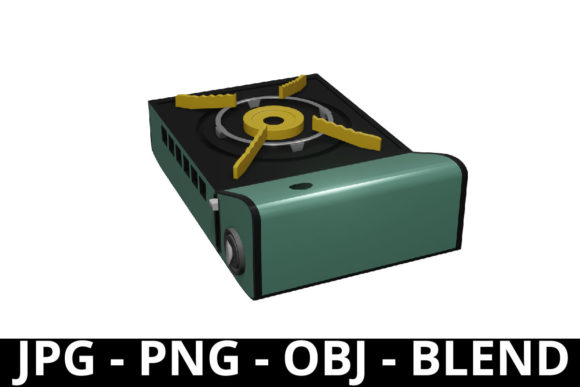
When you are working on a design project that requires a touch of realism without the hassle of physical photography, having a high-quality 3d render portable stove in your toolkit can be a game-changer. This isn't just about finding a generic image; it is about accessing a precise digital asset that captures the intricate details of a modern cooking device. Whether you are visualizing a camping gear catalog, designing a sleek kitchen layout, or creating marketing materials for an outdoor adventure brand, this specific 3D model offers the flexibility and accuracy needed to bring your concepts to life.
The beauty of a dedicated 3D rendering lies in its adaptability. Unlike a static photograph, which freezes a single moment with fixed lighting and angles, a 3D model allows you to manipulate every aspect of the scene. You can place a square steel burner next to a round grill plate, adjust the chrome finish to reflect a warm sunset, or isolate the device against a stark white background for a clean product shot. The inclusion of multiple file formats like OBJ, BLEND, JPG, and PNG means that whether you are using Blender, Maya, or simply need a quick texture reference, you have everything you need in one convenient ZIP folder.
Real-World Applications Across Industries
The utility of a 3d render portable stove extends far beyond simple illustration. It serves as a foundational element for various industries where the concept of "cooking" or "heat" needs to be communicated visually. Let's look at how different professionals might leverage this asset in their daily workflows.
- E-commerce and Product Marketing: For brands selling propane or butane cookers, creating a full photoshoot for every color variation is expensive and time-consuming. With a 3D model, you can instantly generate images of the same stove in matte black, brushed steel, or vibrant red. You can simulate the flame effect, showing the hot, dancing fire of a gas burner, to entice customers without needing to light a real fire for safety reasons.
- Architectural Visualization: Interior designers often need to show clients what a compact kitchen setup looks like in a tiny home or a recreational vehicle (RV). A portable cooker is a perfect fit for these small spaces. By integrating a realistic 3D render into a room layout, architects can demonstrate functionality and space efficiency, highlighting how a metal appliance fits seamlessly into a square countertop.
- Outdoor Adventure Content: Travel bloggers and outdoor enthusiasts frequently need visuals for articles about camping trips. Instead of relying on stock photos that everyone else uses, creators can build unique scenes featuring a portable stove set up in a forest clearing or on a rocky beach. They can control the lighting to match the golden hour, ensuring the image feels warm and inviting rather than cold and industrial.
- Gaming and Virtual Reality: Game developers building simulation games or survival titles require accurate models of equipment. A detailed 3D object representing a gas-stove allows players to interact with virtual cooking mechanics. The ability to import the OBJ file directly into a game engine ensures that the collision boxes and textures align perfectly with the rest of the environment.
Why the Format Matters: From BLEND to PNG
The versatility of the provided ZIP folder is a significant advantage for designers who work across different software ecosystems. When you download a package containing BLEND files, you gain access to the native source code of the 3D world. This means you can tweak the geometry of the shape, change the material properties of the chrome plating, or animate the flame rising from the burner. If you are a Blender user, this is the ultimate starting point for customization.
However, not every workflow requires a fully editable 3D file. Sometimes, you just need a high-resolution image to drop into a brochure or a website banner. That is where the included JPG and PNG files come into play. These renders are pre-computed, meaning the lighting, shadows, and reflections are already calculated. The PNG format is particularly useful because it often comes with an alpha channel, allowing you to isolate the stove from any background. You can place the isolated object over a scenic mountain backdrop or a modern kitchen interior without worrying about messy edges.
The OBJ format acts as a universal bridge, compatible with almost all major 3D modeling software. This ensures that even if you are working in Cinema 4D, 3ds Max, or Unity, you can import the portable cooker and begin modifying it immediately. This cross-platform compatibility removes technical barriers, allowing creative teams to collaborate more effectively regardless of their preferred tools.
Navigating Design Considerations and Limitations
While a 3d render portable stove offers immense freedom, there are practical considerations to keep in mind when applying it to your projects. One of the primary challenges is achieving photorealism. Even with high-quality textures, replicating the chaotic nature of a real flame can be tricky. A static render might look good, but if you need to show the dynamic movement of heat waves or the flickering of a gas jet, you will need to spend time animating the particle effects within your 3D software.
Another consideration is scale. In the digital realm, it is easy to lose track of size. A portable stove might look perfect in a close-up shot, but when placed next to a tent or a picnic table in a wider scene, the proportions might feel off. Always double-check the dimensions of the model relative to other objects in your scene. Is the square plate too large for the mobile unit? Does the handle feel ergonomic for a human hand? Paying attention to these details ensures the final image feels authentic.
There are also limitations regarding the physics of the appliance. A 3D render cannot replicate the actual heat output or the smell of burning butane. While you can use visual cues like heat distortion or glowing embers to suggest warmth, the sensory experience is purely visual. Additionally, while the model can be rotated and viewed from any angle, complex internal mechanisms—like the valve system inside a propane tank—are usually externalized or simplified. If your project requires a cutaway view showing the internal workings, you may need to request a custom modification or create a separate wireframe version.
Maximizing the Potential of Your Digital Cooker
To get the most out of this asset, think creatively about how you combine it with other elements. Don't just place the stove in isolation; build a narrative around it. Imagine a rainy day scenario where the stove is the only source of warmth, surrounded by steam rising from a pot. Or visualize a futuristic camping trip where the chrome finish reflects a neon city skyline. The possibilities are endless when you treat the 3D model as a living part of your composition rather than just a static object.
Whether you are designing a new line of outdoor appliances or creating content for a travel magazine, the right tools make all the difference. By utilizing a comprehensive 3d render portable stove package, you save hours of modeling time and ensure a professional finish. The combination of flexible file formats and high-fidelity rendering allows you to adapt to any client need, from a quick social media post to a detailed architectural presentation. Ultimately, this asset empowers you to focus on the story you want to tell, letting the realistic details of the device speak for themselves.