Black Green Abstract Background Dynamic: The Future of Digital Visual Impact
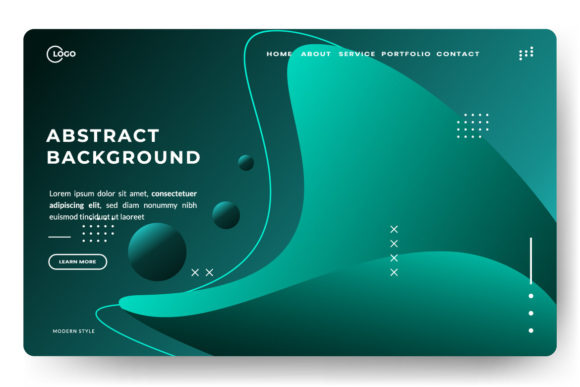
In an era where digital attention spans are measured in milliseconds, the visual language we use to communicate has never been more critical. The Black Green Abstract Background Dynamic is not merely a decorative choice; it represents a significant shift in how brands and creators convey depth, innovation, and sophistication. This design aesthetic combines the authoritative stability of deep black with the vibrant energy of green, rendered through fluid, liquid 3D gradients that create a sense of constant motion.
For professionals ranging from UI/UX developers to marketing strategists, understanding the nuances of this style is essential. It moves beyond static imagery into a realm where texture and light interact to tell a story before a single word is read. Whether you are designing a high-conversion landing page or producing promotional video content, integrating these dynamic elements can fundamentally alter user perception and engagement.
The Evolution of Liquid 3D Gradients in Modern Design
The journey from flat design to immersive 3D experiences has been gradual but decisive. We have moved past the rigid grids of early web design into a space defined by organic flow and tactile realism. The Black Green Abstract Background Dynamic textured style sits at the forefront of this evolution. It takes the concept of "liquid" design—where colors blend seamlessly like flowing water—and anchors it within a high-contrast palette that commands authority.
Historically, abstract backgrounds served as subtle noise to prevent distraction. Today, they act as active participants in the user experience. The specific combination of black and green offers a unique psychological advantage. Black provides a canvas of infinite depth, eliminating visual clutter and allowing foreground elements to pop. Green, particularly when used in gradient shifts, evokes growth, technology, and financial stability without the aggressive nature of red or the passivity of blue.
This trend is not fleeting. As hardware capabilities improve and rendering engines become more accessible, users now expect websites and applications to feel alive. A static background feels dated in a world where scrolling triggers animations and interactions respond to cursor movement. The liquid 3D approach satisfies this modern expectation by creating a living environment that breathes and shifts, keeping the viewer engaged for longer durations.
Why Texture Matters in Digital Spaces
One of the most overlooked aspects of the Black Green Abstract Background Dynamic is its textural component. In a purely digital medium, the absence of physical touch can make interfaces feel cold and distant. By introducing texture—whether it appears as grain, subtle ripples, or a frosted glass effect over the liquid gradients—we bridge the gap between the virtual and the tangible.
- Depth Perception: Texture adds layers to the image, preventing the "flat" look that often plagues simple color gradients. It creates a hierarchy where the eye knows exactly where to focus.
- Visual Interest: A smooth gradient is pleasing, but a textured gradient invites closer inspection. This encourages users to linger on the page, increasing dwell time.
- Brand Identity: Custom textures allow brands to differentiate themselves. Two companies might use similar color palettes, but their textural choices define their unique character.
When applied to a liquid 3d with gradient color style, the texture acts as the skin of the liquid, giving it weight and substance. This is particularly effective for development UI/UX projects where the goal is to create an interface that feels robust and reliable.
Strategic Applications Across Industries
The versatility of this design style makes it applicable across a wide spectrum of professional fields. From corporate presentations to personal portfolios, the ability to adapt the Black Green Abstract Background Dynamic to various contexts is what drives its popularity.
Website Landing Pages and Conversion
For marketers and business owners, the landing page is the storefront of the digital age. A well-crafted background here does more than look good; it guides the user toward action. The dark base of the black absorbs light, while the green highlights naturally draw the eye toward call-to-action buttons and key value propositions. When combined with a dynamic, moving gradient, the background creates a subconscious sense of forward momentum, subtly encouraging the user to move down the page and convert.
Video Content and Advertising
In the realm of video content, static images often fail to capture the fast-paced nature of social media feeds. Here, the dynamic aspect of the background becomes crucial. Animated loops featuring liquid green flows against a black void are perfect for promotional ads. They stop the scroll because they offer something visually distinct from the typical flat photography or stock footage. For educators and bloggers, using these backgrounds in thumbnails or intro sequences signals a modern, tech-savvy brand identity.
UI/UX Development and Software Interfaces
Developers are increasingly adopting these aesthetics for dashboards, SaaS platforms, and mobile applications. The high contrast ensures readability, which is a core principle of accessibility. However, the challenge lies in balancing the vibrancy of the green with the usability of the interface. The solution often lies in using the abstract background as a backdrop for floating cards or modal windows, allowing the content to remain sharp and legible while the environment provides context and mood.
Meeting User Expectations in a Changing Market
User expectations have shifted dramatically. People no longer want information delivered in a sterile, boxy format. They crave immersion. The market preferences of today's audience, particularly those aged 20 to 50, lean towards experiences that feel curated and bespoke. A generic template looks cheap; a custom-designed Black Green Abstract Background Dynamic feels premium.
This shift is also driven by lifestyle changes. As remote work and digital consumption dominate our daily lives, users spend more time staring at screens. The visual fatigue associated with bright white backgrounds is real. Dark mode aesthetics, enhanced by rich gradients like the green-on-black variation, reduce eye strain while maintaining visual appeal. This practical consideration makes the style not just trendy, but functional.
Practical Implementation and Best Practices
While the visual impact of this style is undeniable, successful implementation requires technical precision and artistic restraint. Simply slapping a green gradient onto a black screen is not enough to achieve the desired effect. To truly leverage the potential of design style liquid 3d with gradient color, creators must pay attention to performance, consistency, and accessibility.
- Performance Optimization: Dynamic backgrounds can be resource-heavy. If the animation is too complex, it may slow down load times, hurting SEO and user retention. Use optimized video formats (like WebM) or lightweight CSS animations rather than heavy WebGL libraries unless absolutely necessary.
- Contrast and Readability: Always test your typography against the background. The green gradients should not compete with the text. Using semi-transparent overlays or ensuring text sits on solid-colored sections of the design is vital for maintaining E-E-A-T standards of clarity and trustworthiness.
- Subtlety in Motion: The motion should be hypnotic, not distracting. Fast, jerky movements can cause nausea or annoyance. The "liquid" quality implies smoothness; the transition between colors should feel organic, like oil spreading on water.
- Contextual Relevance: Ensure the mood matches the message. While green often signifies growth and money, it can also represent nature or toxicity depending on the shade. Choose the specific hue carefully to align with your brand narrative.
For freelancers and hobbyists looking to experiment, starting with simple gradient meshes and adding a noise filter can yield impressive results without needing advanced 3D modeling skills. As tools become more democratized, the barrier to entry for creating high-quality abstract art continues to lower, allowing more voices to contribute to the visual landscape.
Looking Ahead: The Role of Immersive Visuals
As we look toward the future of digital interaction, the lines between reality and simulation will continue to blur. Augmented reality (AR) and virtual reality (VR) will likely adopt these liquid, textured styles as standard environments for navigation and display. The Black Green Abstract Background Dynamic serves as a precursor to this fully immersive web.
It represents a maturation of design philosophy. We are moving away from decoration for decoration's sake toward visuals that serve a functional purpose in guiding emotion and behavior. The combination of the mysterious black and the hopeful green creates a tension that keeps the user interested. It suggests that there is always more beneath the surface, inviting exploration.
Whether you are a seasoned agency owner pitching to a new client or a solo developer building a portfolio, incorporating these elements demonstrates a forward-thinking mindset. It shows that you understand the current technological landscape and the evolving tastes of your audience. By embracing the Black Green Abstract Background Dynamic textured style, you are not just following a trend; you are investing in a visual language that speaks the universal dialect of modern innovation.
In conclusion, the power of this design lies in its duality. It is grounded in the solidity of black yet fluid in its expression of green. It is abstract yet deeply emotional. For anyone seeking to elevate their digital presence, mastering the art of the liquid 3D gradient is a step toward creating experiences that are not only seen but felt.