Integrating the 3d Rendering Bird House for Design in Modern Creative Workflows
In the rapidly evolving landscape of digital asset creation, the demand for high-fidelity, versatile 3D models has never been more critical. Among the diverse array of objects available to creators, the 3d rendering bird house for design stands out as a unique intersection of nature, architecture, and technology. This specific asset is not merely a digital replica of a small structure; it represents a sophisticated tool that bridges the gap between wildlife photography, architectural visualization, and graphic storytelling. For professionals ranging from freelance illustrators to marketing agencies, understanding the nuances of this object is essential for producing work that resonates with contemporary audiences.
Defining the Asset: More Than Just a Wooden Box
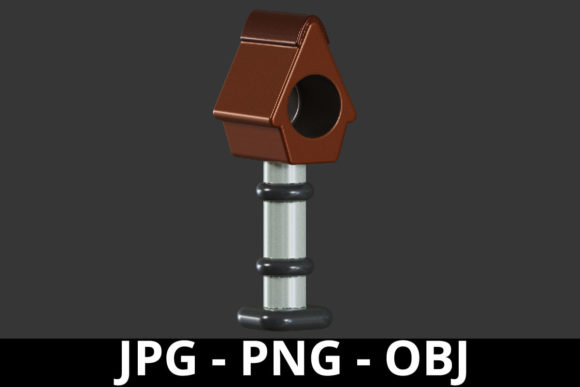
At its core, a bird house or bird cottage is a functional habitat designed to attract birds, but in the realm of digital production, it transforms into a complex study of form and texture. The term 3d rendering bird house for design refers to a meticulously crafted digital model optimized for various creative applications. Unlike simple placeholders, these assets often feature intricate details such as weathered wood grain, metal accents on roofs, and realistic shadowing that interacts dynamically with virtual lighting environments.
When creators download a comprehensive ZIP folder containing formats like JPG, PNG, OBJ, and housing files, they are gaining access to a complete workflow solution. The inclusion of an OBJ file allows for deep manipulation within 3D software, enabling artists to alter the dimensions of the box, adjust the size of the entrance hole, or modify the cage structure. Meanwhile, the rasterized outputs (JPG and PNG) provide immediate visual assets for marketing materials, social media campaigns, or web graphics where a full 3D scene is unnecessary. This duality ensures that the asset serves both the technical requirements of a 3D environment and the aesthetic needs of flat design.
The Convergence of Nature and Minimalism
One of the most compelling reasons for the surge in popularity of the 3d rendering bird house for design is its alignment with current design trends, specifically minimalism and eco-conscious aesthetics. In a world saturated with complex digital noise, there is a growing preference for clean, isolated objects that convey simplicity and clarity. A minimal birdhouse, rendered with soft lighting and placed against a neutral background, perfectly encapsulates this minimalism. It acts as a focal point without overwhelming the viewer, making it ideal for UI/UX design, app icons, and branding elements.
Furthermore, the vintage and antique variations of these models tap into a nostalgic consumer sentiment. By simulating textures like aged wood, rusted metal, or peeling paint, designers can evoke a sense of history and timelessness. This is particularly relevant for brands focusing on sustainability, zoology education, or outdoor lifestyle products. The ability to render a beautiful birdcage or an open nest concept allows marketers to tell stories about heritage, craftsmanship, and the natural world without relying on expensive photoshoots.
Adapting to Changing Industry Needs
The shift towards remote work and digital-first strategies has fundamentally altered how creatives source their assets. Traditionally, obtaining high-quality images of specific wildlife habitats required significant logistical effort, including location scouting and photography permits. Today, the 3d rendering bird house for design offers a seamless alternative. Professionals no longer need to wait for perfect weather conditions to capture the right shadow or angle; they can generate infinite variations of a wildlife scene instantly.
This flexibility addresses a critical pain point in modern workflows: the need for speed and consistency. Marketing teams launching global campaigns require assets that maintain brand integrity across different platforms. A 3D model ensures that the object remains consistent regardless of the viewing angle or lighting condition. Whether the project requires a bright, sunny day setting or a moody, overcast atmosphere, the underlying geometry of the bird home remains intact, allowing for rapid iteration. This capability is particularly valuable for freelancers and entrepreneurs who must deliver high-quality results under tight deadlines.
Technical Versatility and Workflow Integration
The utility of the rendering process extends beyond mere visualization; it empowers creators to explore concepts that would be physically impossible to construct. Imagine designing a concept for a futuristic home for urban wildlife. With a standard wooden birdhouse as a base, an artist can use the provided OBJ file to experiment with organic shapes, transparent materials, or floating structures. The ability to isolate the animal or the house allows for precise compositing, ensuring that the final image looks professional and polished.
Moreover, the availability of free resources democratizes access to high-end tools. The provision of a ZIP folder containing multiple formats means that users do not need expensive licenses to get started. They can enter a new project, space the elements appropriately, and begin creating immediately. This accessibility fosters innovation among enthusiasts and students, encouraging them to experiment with zoology themes and environmental storytelling. As the industry moves towards more inclusive and accessible design practices, these open-source style assets play a pivotal role.
Strategic Applications for Marketers and Creators
For marketers, the 3d rendering bird house for design is a powerful vehicle for engagement. In the context of rest and wellness branding, imagery of a quiet nest or a serene habitat evokes feelings of safety and tranquility. These emotional triggers are crucial for connecting with consumers on a deeper level. By utilizing a cute and inviting render, brands can soften their message and create a welcoming atmosphere around their products or services.
In the educational sector, these assets are invaluable. Teachers and content creators can use the graphic elements to explain biological concepts without disturbing real wildlife. A digital empty birdcage or a detailed cross-section of a roof can illustrate nesting behaviors and structural adaptations effectively. The isolated nature of the 3D model ensures that the focus remains entirely on the educational content, free from distracting background elements.
The Future of Digital Habitat Design
As we look toward the future, the integration of AI-driven design tools will likely further enhance the capabilities of existing 3D models. The 3d rendering bird house for design will serve as a foundational element for generative art projects, where algorithms can automatically create thousands of variations of a single structure. This evolution promises to make the creation of complex scenes even faster and more intuitive. However, the human touch remains irreplaceable. The choice of material, the placement of light, and the narrative context are decisions that require artistic judgment.
Ultimately, the value of this asset lies in its adaptability. It is not just a static image but a dynamic component of a larger creative ecosystem. Whether used to represent a bird sanctuary, a product packaging design, or a conceptual art piece, the render captures the essence of the natural world in a controlled, digital environment. By embracing these tools, professionals can elevate their work, meeting the demands of a fast-paced market while maintaining the highest standards of quality and creativity.
In conclusion, the 3d rendering bird house for design is a testament to the power of digital innovation. It combines the charm of a vintage birdhouse with the precision of modern technology, offering a versatile solution for a wide range of industries. As creators continue to push the boundaries of what is possible, assets like these will remain at the forefront of the design revolution, proving that even the smallest structures can have a massive impact on our digital landscape.