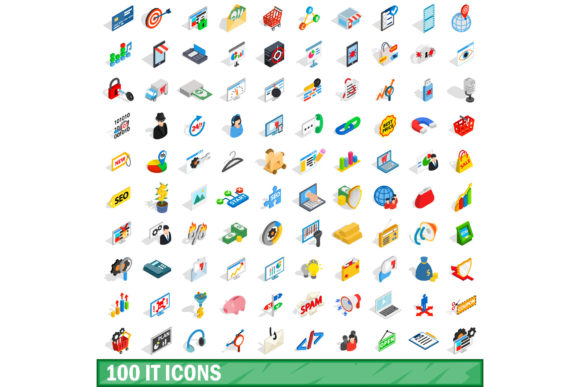
Unlocking Visual Depth: The Power of the 100 It Icons Set, Isometric 3d Style
In the rapidly evolving landscape of digital design, visual communication has shifted from flat minimalism to rich, dimensional storytelling. Designers and developers are increasingly seeking assets that add depth, context, and a sense of realism without overwhelming the user interface. This is where the 100 It Icons Set, Isometric 3d Style emerges as a transformative resource. By bridging the gap between technical precision and artistic flair, this collection offers a versatile toolkit for anyone looking to elevate their projects.
The transition to three-dimensional representations in iconography is not merely a stylistic trend; it is a functional evolution. Isometric illustrations provide a unique perspective that allows viewers to grasp complex concepts quickly. Whether you are building a dashboard for enterprise software, creating educational materials for students, or designing marketing collateral for a tech startup, the ability to visualize data and processes in 3D space significantly enhances user engagement and comprehension.
The Anatomy of Isometric Design in Technology
To understand the value of this specific asset collection, one must first appreciate the underlying geometry of isometric design. Unlike traditional perspective drawing, which uses vanishing points to create depth, isometric projection maintains parallel lines throughout the image. This creates a consistent scale across the entire illustration, making it ideal for representing technical systems, network topologies, and software interfaces.
The 100 It icons set in isometric 3d style leverages this geometric consistency to render technology-related subjects with clarity. Each icon acts as a miniature architectural model, allowing users to see the "inside" of a server, the layers of a cloud infrastructure, or the components of a mobile device. This approach eliminates ambiguity. In a flat design, a folder might look like a simple rectangle, but in an isometric view, the thickness of the folder and the documents inside become visible, adding a layer of narrative to the symbol.
This style is particularly effective for conveying complexity. When explaining a multi-step process or a layered security system, flat icons often require excessive text to explain the relationship between elements. Isometric icons solve this by visually stacking these relationships. The depth inherent in the design naturally guides the eye through the hierarchy of information, reducing cognitive load for the audience.
Why Dimensions Matter in Digital Interfaces
The human brain processes three-dimensional objects faster than two-dimensional shapes when it comes to spatial reasoning. By incorporating the 100 It Icons Set, Isometric 3d Style into your workflow, you tap into this natural cognitive preference. In applications ranging from fintech dashboards to healthcare monitoring systems, the added dimensionality helps distinguish active states from inactive ones without relying solely on color changes.
Furthermore, isometric designs offer a distinct aesthetic appeal that stands out in crowded digital marketplaces. While flat design dominated the early 2010s, modern users have developed a tolerance for, and even an expectation of, richer visuals. The subtle shadows, highlights, and angles found in high-quality isometric vectors create a tactile feel, suggesting that the digital interface is a tangible environment rather than a flat screen.
Diverse Applications Across Industries
The versatility of isometric vector illustrations makes them applicable across a vast spectrum of industries. The 100 it icons set in isometric 3d style is not limited to just software development; its utility extends to education, marketing, corporate reporting, and hobbyist projects alike.
- Enterprise Software and Dashboards: For business owners and IT professionals, visualizing data is crucial. Isometric icons can represent servers, databases, and network connections in a way that feels intuitive. A dashboard tracking server health becomes more engaging when the servers are depicted as physical, robust units rather than abstract symbols.
- Educational Materials: Educators and researchers can use these assets to simplify complex technological concepts. When teaching about cybersecurity, for instance, showing a shield protecting a database in 3D helps students visualize the concept of defense in depth. The clarity of the 100 It Icons Set, Isometric 3d Style ensures that learners focus on the concept rather than deciphering the graphic.
- Marketing and Branding: Creators and small business owners need to capture attention quickly. Isometric illustrations are perfect for landing pages, brochures, and social media campaigns. They convey a sense of innovation and modernity, positioning a brand as forward-thinking and technically proficient.
- Game Development and Prototyping: Hobbyists and indie game developers often rely on isometric art for strategy games or simulation titles. These icons serve as excellent placeholders or final assets for UI elements, inventory screens, and map markers.
The common thread across all these sectors is the need for clarity and engagement. Whether the goal is to train a new employee, sell a SaaS product, or illustrate a research paper, the ability to present information in a structured, 3D format provides a competitive edge.
Technical Advantages of Vector-Based Assets
One of the most critical aspects of the 100 it icons set in isometric 3d style is its availability in multiple professional formats, including JPG, EPS, AI, PSD, and PNG. This flexibility addresses the diverse needs of different workflows and software ecosystems.
Scalability Without Compromise
Vector formats like EPS and AI (Adobe Illustrator) are the backbone of professional design. Unlike raster images, which lose quality when resized, vector graphics are mathematically defined. This means you can scale an icon from a tiny favicon to a massive billboard print without any loss of sharpness or detail. For businesses that require branding consistency across various mediums, this scalability is non-negotiable.
The inclusion of PSD files adds another layer of utility. Photoshop Document files allow designers to work with layers, adjusting colors, shadows, and textures independently. If a project requires a specific color palette change to match a company's brand guidelines, a layered PSD file enables rapid customization that would be impossible with a flat JPG or PNG.
Workflow Integration
For web developers and UI/UX designers, having PNG versions is essential for immediate implementation. These files come with transparency options, allowing them to blend seamlessly into any background design. Meanwhile, the JPG format ensures compatibility with systems that do not support transparent backgrounds or advanced vector rendering.
The comprehensive nature of the file package means that teams can collaborate effectively. A designer might start with the AI file to tweak the aesthetics, while a developer grabs the PNG for the codebase, and a marketer exports the JPG for a presentation. This seamless flow reduces friction and accelerates project timelines.
Implementation Strategies for Maximum Impact
Simply downloading a set of icons is only the first step. To truly leverage the potential of the 100 It Icons Set, Isometric 3d Style, creators must integrate them thoughtfully into their designs. Here are several strategies to ensure these assets enhance rather than clutter the final output.
- Maintain Consistency: One of the hallmarks of good design is consistency. Ensure that the lighting, angle, and shadow intensity of the isometric icons remain uniform throughout your project. Mixing different styles or varying the light sources can break the immersion and make the design look disjointed.
- Use White Space Effectively: Isometric icons are detailed and can be visually heavy. Give them room to breathe. Avoid cramming too many icons together; instead, use negative space to highlight each element. This approach improves readability and draws attention to key features.
- Combine with Flat Elements: A popular technique in modern UI design is mixing isometric illustrations with flat typography and buttons. This contrast creates a dynamic hierarchy. The 3D icons act as focal points, while the flat elements provide clear navigation and readability.
- Contextualize the Data: Don't just place an icon next to text; let the icon tell part of the story. If you are using an icon representing a cloud storage service, position it so that it appears to be "holding" the data being discussed. This narrative integration strengthens the connection between the visual and the informational content.
Customization for Brand Identity
While the default styling of the 100 it icons set in isometric 3d style is polished and ready-to-use, there is often room for personalization. Because the assets are available in editable formats like AI and PSD, you can alter the color schemes to align perfectly with your brand identity. Changing the primary color of a server icon to match your corporate blue, for example, reinforces brand recognition instantly.
Additionally, you can experiment with different lighting effects. Adjusting the direction of the light source can change the mood of the illustration from bright and cheerful to serious and professional. This level of control empowers creators to tailor the visuals to the specific tone of their message.
Considerations for Long-Term Projects
When selecting assets for long-term projects, future-proofing is a key consideration. The 100 It Icons Set, Isometric 3d Style offers a timeless aesthetic because isometric design is rooted in geometry rather than fleeting trends. However, it is important to consider how these assets will age alongside your platform.
As web technologies evolve, the performance of heavy graphical assets becomes a concern. While vector formats are lightweight, complex isometric renders can sometimes increase page load times if not optimized correctly. Designers should ensure that exported PNGs are compressed without sacrificing quality and that SVG versions are used wherever possible for web delivery.
Furthermore, accessibility should never be overlooked. While isometric icons are visually striking, they must still be accessible to users who rely on screen readers. Always pair these visuals with descriptive alt text that explains the function or meaning of the icon. This ensures that your content remains inclusive and compliant with web standards.
The Future of Iconography
The trajectory of digital design suggests a continued move towards immersive experiences. As augmented reality (AR) and virtual reality (VR) become more prevalent, the demand for 3D assets will only grow. The skills required to create and utilize isometric illustrations are becoming increasingly valuable in the job market.
Professionals who can effectively integrate the 100 It Icons Set, Isometric 3d Style into their workflows are well-positioned to lead this shift. By understanding the nuances of depth, perspective, and vector manipulation, they can create interfaces that are not only functional but also memorable. Whether you are a seasoned graphic designer or a hobbyist exploring new creative avenues, mastering this style opens doors to a wider range of possibilities.
In conclusion, the 100 it icons set in isometric 3d style represents more than just a collection of graphics; it is a tool for better communication. By providing a rich, dimensional vocabulary for your designs, it allows you to convey complex ideas with simplicity and elegance. From enhancing user interfaces to clarifying educational content, the impact of these assets is profound. With their availability in multiple formats and their adaptability to various industries, they stand as a testament to the enduring power of thoughtful, high-quality design.